

Honestly, the phrase millwork meaning gets thrown around a lot in renovation conversations, design blogs, and contractor websites. But when homeowners actually stop and ask what it really means, things get a little fuzzy. Is millwork trim? Is it cabinetry? Is it furniture? Or is it one of those industry words professionals use that somehow covers everything and nothing at the same time?
Let’s be real. If you’re planning a renovation in Port Coquitlam or Langley, or even just browsing ideas for your home, understanding millwork is one of those things that quietly separates a “nice update” from a wow, this-feels-custom result.
This guide breaks it all down. No fluff. No vague definitions. Just a straightforward, experience-based explanation of millwork meaning, how it’s used today, and why it plays such a significant role in modern homes.
Millwork Meaning: The Simple Explanation Most People Never Get
At its core, the millwork meaning refers to wood products that are manufactured in a mill and installed as part of a building’s interior or exterior. That sounds formal, but let’s simplify it.
Millwork includes things like:
- Baseboards and crown mouldings
- Door and window casings
- Custom cabinets and built-ins
- Wall panels, slat walls, and feature details
- Stair components and railings
- Fireplace surrounds and mantels
If it’s wood (or wood-based), custom-sized, and permanently installed as part of the structure, it probably falls under millwork.
But here’s the key detail many people miss. Millwork is not mass-produced furniture. It’s crafted to fit a space. That difference changes everything.
What Is Millwork, Really? A Practical Definition for Homeowners
So, what is millwork from a homeowner’s perspective?
Think of millwork as the architectural woodwork that shapes how a home looks and feels. It’s the quiet detail you don’t always notice immediately, but you absolutely feel when it’s done right.
A quick millwork definition that actually makes sense:
Millwork is custom or semi-custom woodwork made in a workshop and installed on-site to enhance structure, function, and aesthetics.
When someone asks you to define millwork, the best way to explain it is this. It’s the difference between a house that feels generic and one that feels intentionally designed.
What Is Millworking and How Is It Different from Carpentry?
People often confuse millwork with basic carpentry. That confusion is understandable, but the difference matters.
Carpentry is typically about framing, rough construction, and structural work. Millworking, on the other hand, is about precision, finish, and detail.
Millworkers work in controlled shop environments. They measure, fabricate, sand, finish, test, adjust, and then install. It’s slower, more deliberate, and far more exact.
A simple way to think about it:
- Carpentry builds the bones
- Millworking adds the personality
And honestly, personality is what homeowners remember.
Why Millwork Matters More Than Ever in Modern Homes
Modern homes are cleaner, simpler, and more intentional than ever before. That’s precisely why millwork matters so much.
When design becomes minimal, details become louder.
Flat walls look boring without texture. Open-concept layouts feel cold without visual anchors. Storage problems become apparent when spaces are uncluttered. Custom millwork solves all of that.
Millwork:
- Adds warmth without clutter
- Defines spaces without walls
- Creates storage that doesn’t feel bulky
- Makes a home feel cohesive
In places like Port Coquitlam and Langley, where homes often blend contemporary layouts with family-friendly living, millwork bridges the gap beautifully.
Millwork vs Moulding: What’s the Difference?
This is a big one.
People often use the terms interchangeably, but they’re not the same thing.
Moulding and millwork are related, but moulding is just one category within millwork.
Moulding includes:
- Baseboards
- Crown mouldings
- Chair rails
- Door and window trims
Millwork includes all moulding, plus:
- Cabinetry
- Built-ins
- Wall panels
- Stair parts
- Custom wood features
So when someone says “we’re doing millwork,” they’re usually talking about a broader, more integrated scope than just trim.
Custom Millwork: Where Homes Truly Become Personal
Let’s talk about custom millwork, because this is where things get interesting.
Custom millwork is explicitly designed for your home, your measurements, your lifestyle, and your taste. No filler panels. No awkward gaps. No compromises.
Examples you might recognize:
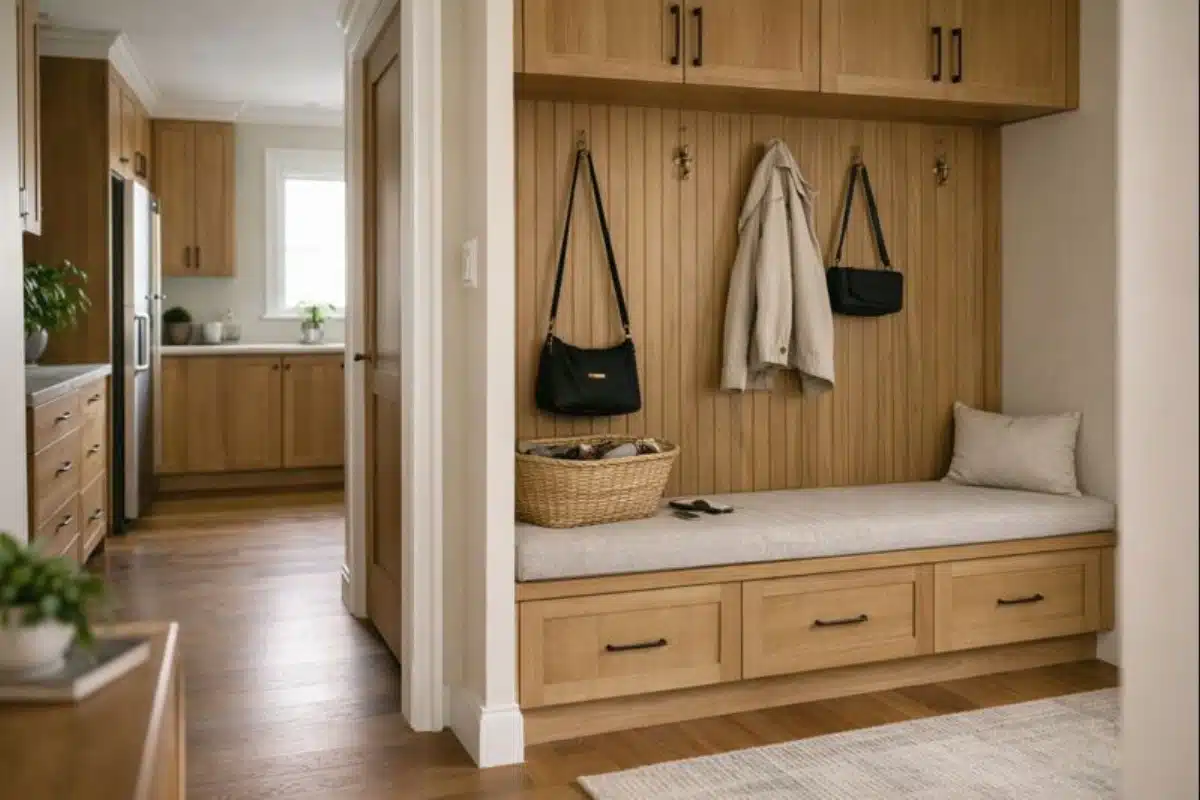
- A mudroom bench built precisely to your wall width
- A kitchen island with hidden storage designed around how you cook
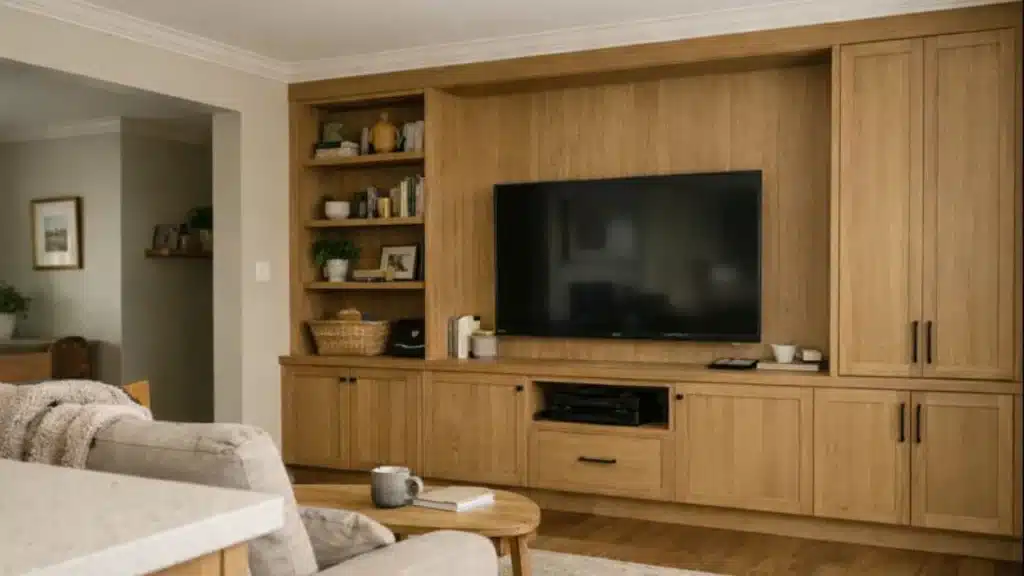
- A media wall that hides wires, speakers, and clutter
- Built-ins that frame a fireplace instead of competing with it
Honestly, once you’ve lived with exemplary custom millwork, it’s hard to go back to off-the-shelf solutions.
If you’ve ever searched for custom millwork and wondered whether it’s worth it, the short answer is yes. The long answer is the rest of this article.
Millwork in Kitchens: More Than Just Cabinets
Kitchens are where millwork quietly does its best work.
Cabinetry is the obvious piece, but millwork goes far beyond boxes and doors.
It includes:
- Custom hood surrounds
- Integrated pantry units
- Appliance panels
- Open shelving with structural support
- Ceiling details and trim alignment
Exemplary millwork makes a kitchen feel intentional instead of assembled.
This is why homeowners looking for a millwork shop often start with kitchen projects. It’s where craftsmanship is easiest to see and hardest to fake.
Millwork in Living Spaces and Feature Walls
Living rooms and family rooms are no longer just sofas and TVs. They’re multifunctional spaces, and millwork helps organize them visually.
Popular millwork features include:
- Slat walls behind TVs
- Floating shelves with hidden supports
- Fireplace surrounds with depth and texture
- Built-in storage that blends into walls
These details aren’t just decorative. They control sightlines, hide mess, and make spaces feel calm.
That calm, by the way, is not accidental.
Millwork in Bedrooms and Closets
Bedrooms are becoming more minimal, not more decorative. That means millwork plays a quieter but more critical role.
Custom headboards, integrated nightstands, and built-in wardrobes remove visual noise. Closets designed with millwork are easier to use, easier to organize, and, honestly, easier to maintain.
When people search for millwork near me, this is often the kind of upgrade they didn’t know they needed until they saw it.
Millwork and Home Renovations: Why They’re Connected
If you’re planning a renovation, millwork should never be an afterthought.
Here’s why. Renovations change layouts, ceiling heights, wall depths, and transitions. Off-the-shelf components don’t adapt well to change. Millwork does.
That’s why homeowners looking for home renovation near me often end up working with millwork specialists, whether they planned to or not.
Millwork allows:
- Seamless transitions between old and new
- Matching historical details in older homes
- Clean finishes in modern builds
- Custom solutions to awkward spaces
In hometown renovation projects around Port Coquitlam and Langley, this flexibility is priceless.
How Millwork Impacts Home Value
This part surprises people.
Millwork doesn’t just look good. It adds real, tangible value.
Buyers notice:
- Built-in storage
- Quality finishes
- Cohesive design
- Craftsmanship
Even if they don’t know the word “millwork,” they feel the difference. Homes with thoughtful millwork photograph better, show better, and often sell faster.
That’s not marketing talk. That’s reality.
Choosing the Right Millwork Shop
Not all millwork is created equal.
A good millwork shop does more than fabricate. They think through design, installation, durability, and how pieces age over time.
Things to look for:
- In-house design and fabrication
- Experience with residential renovations
- Clear material sourcing
- Proper finishing processes
- Precise installation
This is where working with experienced teams makes all the difference.
Millwork in Port Coquitlam and Langley Homes
Homes in Port Coquitlam and Langley have unique character. Some are modern. Some are traditional. Many are somewhere in between.
Millwork bridges those styles effortlessly.
In newer builds, millwork adds warmth and depth. In older homes, it respects character while updating function. That balance is why millwork is becoming a standard, not a luxury.
Homeowners searching for renovation companies near me often discover that millwork specialists are the ones who truly finish a project correctly.
Common Millwork Mistakes to Avoid
Let’s be honest. Millwork done poorly is worse than no millwork at all.
Common mistakes include:
- Ignoring proportions
- Cheap materials with heavy finishes
- Poor alignment with floors and ceilings
- Rushed installation
Exemplary millwork takes time. Anyone promising speed over quality should raise a red flag.
Millwork vs Modular Systems: Which One Wins?
Modular systems have their place. They’re fast, predictable, and sometimes budget-friendly.
But millwork wins when:
- Spaces aren’t standard
- Design matters
- Longevity is important
- Integration is required
Modular fills space. Millwork completes it.
Why Millwork Feels So Different When You Live With It
Here’s a small personal-style example.
Homeowners often say they didn’t realize how much they used specific spaces until millwork changed them. A built-in bench becomes the drop zone everyone uses. A custom cabinet becomes the place where clutter disappears. A wall panel suddenly makes a room feel finished.
That’s the quiet magic of millwork.
Finding the Right Partner for Your Millwork Project
If you’re researching millwork near me, take your time. Ask questions. Visit shops. Look at real projects, not just photos.
Working with professionals who understand both design and construction is what turns good ideas into excellent outcomes.
For homeowners in Port Coquitlam and Langley, local experience matters. Climate, materials, and building styles all play a role.
Conclusion: Why Understanding Millwork Meaning Changes Everything
Understanding the millwork meaning changes how you see your home. It helps you recognize where quality lives and where shortcuts hide.
Millwork isn’t just wood. It’s planning, craftsmanship, and intention made visible. It shapes how spaces work, how they feel, and how they age.
When done right, millwork doesn’t shout. It quietly makes everything else better.


