


Bathroom ventilation and moisture control look simple until you’re dealing with them on the coast. If you’ve renovated a bathroom in Toronto or Calgary, exhaust fans and code minimums probably felt like a solved problem. Vancouver sees rain on more than half the days of the year, and that moisture doesn’t stay outside, it works its way into airtight, well-insulated homes and settles behind tile, inside cabinet boxes, under vanities. A fan that’s fine in a drier city can fall short here. At Armak Millwork, we’ve seen what happens when ventilation is an afterthought, and how a few right calls early on save homeowners from redoing brand-new work a year later.
Why Coastal BC Puts Extra Pressure on Bathroom Ventilation?
Metro Vancouver gets over 1,200mm of rain a year, and humidity rarely drops low enough to give your bathroom a break. Add ocean proximity and frequent coastal fog, and moisture is already high in the air before you even turn on the shower.
Modern construction makes this worse, not better. Newer homes are built airtight for energy efficiency, which is great for heating bills but means humid air has nowhere to escape on its own. Without mechanical ventilation doing real work, that moisture has only one place to go: into your walls, your subfloor, your cabinetry.
A few numbers that explain why this matters here specifically:
- Average annual rainfall in Vancouver: over 1,200mm
- Days of precipitation per year: roughly 160-170
- Relative humidity that supports mold growth: above 60%
- Time for mold to start growing once conditions are right: as little as 48 hours
This isn’t a climate where you can get away with an undersized fan or a window you open occasionally. Coastal BC bathrooms need ventilation that’s built for constant, low-grade moisture pressure, not just an occasional damp day.
What Proper Ventilation Actually Prevents?
Most homeowners think of bathroom ventilation as a comfort feature, something that clears steam off the mirror. In coastal BC, it’s closer to structural insurance. What it actually stops is damage you won’t see until it’s expensive.
Structural Damage Behind the Walls
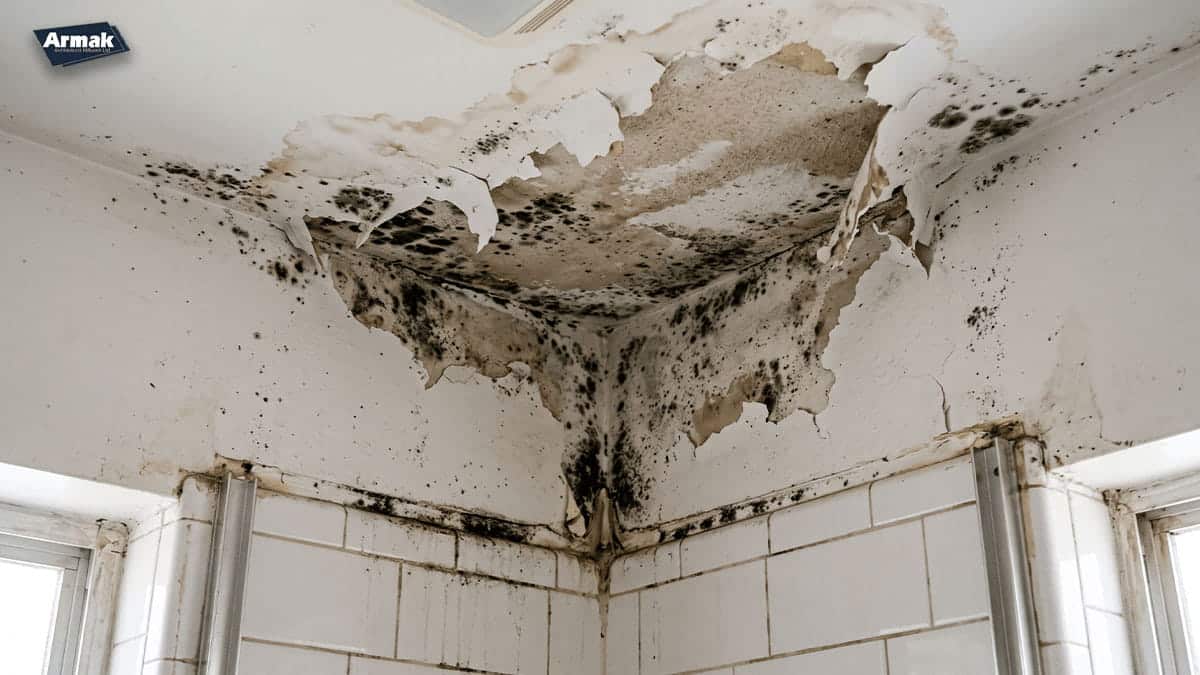
Moisture that isn’t exhausted doesn’t just disappear, it condenses on the coldest surfaces it can find. That’s usually inside wall cavities, behind tile, and around subfloor joists. Over time, trapped moisture rots wood framing, delaminates plywood, and corrodes metal fasteners. Drywall softens and loses structural integrity long before it shows visible stains on the surface. By the time a homeowner notices a soft spot in the floor or a musty smell, the damage is already behind the wall, not on it.
Mold Growth Timeline and Health Risks
Mold doesn’t need much time or much encouragement. Health Canada notes that mold can begin growing within 48 hours once moisture is present on an organic surface like drywall or wood.
BC Building Code Requirements for Bathroom Exhaust Fans
BC Building Code Section 9.32.3.6 requires every bathroom to have either an operable window of at least 0.28 square meters, or a mechanical exhaust fan. Most Vancouver condos and basement suites rely on fans since they lack exterior windows.
Minimum airflow rates:
- Intermittent operation (runs during/after showering): 23 L/s, roughly 50 CFM
- Continuous operation (runs 24/7 at low speed): 9 L/s, roughly 20 CFM
A few non-negotiables the code also requires:
- Duct must vent directly outside, never into an attic or wall cavity
- Rigid or semi-rigid ducting, not flexible hose
- Fan circuit wired by a licensed electrician and inspected by Technical Safety BC
Since ventilation upgrades often tie into electrical and plumbing changes, it’s worth checking what permit costs in Metro Vancouver look like before you finalize your renovation budget.
Sizing Your Fan Right (Not Just Meeting the Minimum)
Meeting code doesn’t mean a fan actually keeps up with coastal moisture. The Home Ventilating Institute recommends sizing based on bathroom area, not just the flat 50 CFM minimum:
| Bathroom size | Recommended CFM |
|---|---|
| Up to 100 sq ft | 1 CFM per sq ft (e.g. 7’×10′ = 70 CFM) |
| Any bathroom, regardless of size | Minimum 50 CFM |
| Over 100 sq ft | Add fixture CFM: toilet 50, shower 50, tub 50, jetted tub 100 |
An undersized fan running longer doesn’t solve the problem. It just wastes electricity while moisture stays in the air. For a typical Vancouver ensuite in the 75-100 sq ft range, contractors commonly install 110 CFM fans rather than the bare 50 CFM minimum, simply because coastal humidity loads are higher than code was written for.
Choosing the Right Ventilation Control
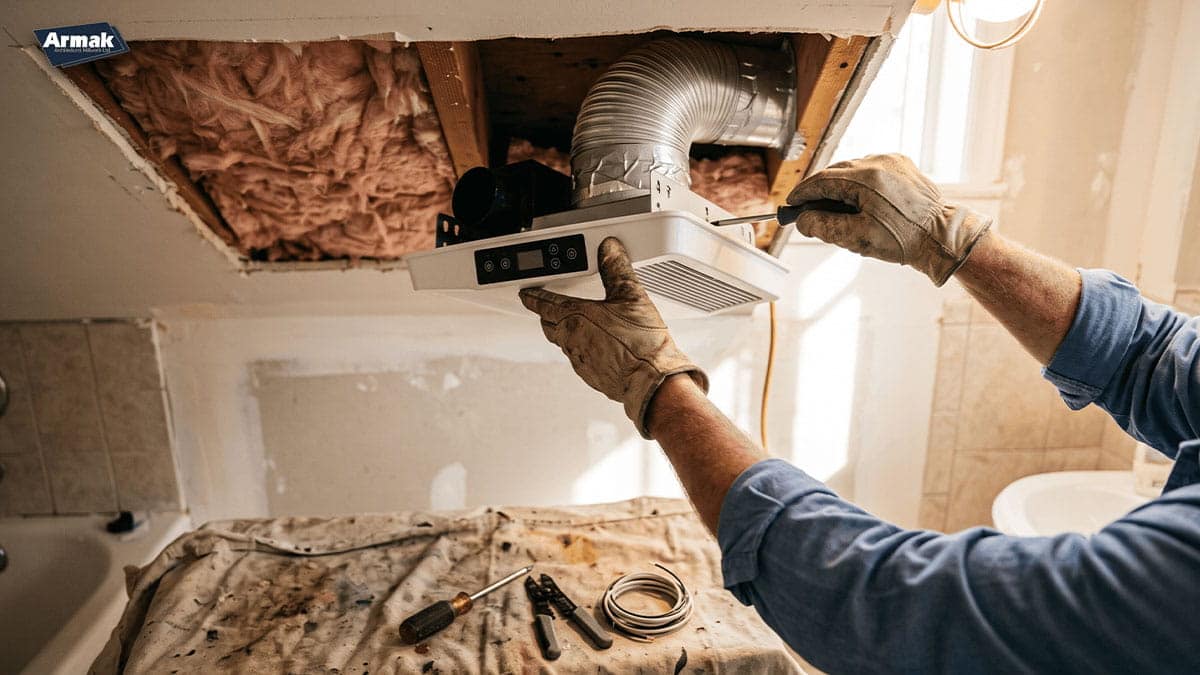
A properly sized fan still depends on how it’s controlled. Manual switches are the weakest option, since most people turn the fan off the moment they leave the bathroom, long before moisture actually clears.
Two upgrades solve this:
- Timer switches keep the fan running for a set period, usually 5 to 60 minutes, after you flip it on
- Humidity-sensing switches monitor relative humidity directly and shut the fan off only once levels drop back to normal, typically in the 40-80% adjustable range
For coastal BC, humidity sensors are worth the extra cost. They adapt to actual conditions instead of a fixed guess, which matters on days when outdoor humidity is already high and a shower pushes indoor levels even higher.
Signs Your Current Bathroom Isn’t Ventilated Properly
A few warning signs are easy to catch before they turn into real damage:
- Mirror stays fogged for more than a few minutes after showering
- Musty smell lingers even when the bathroom looks clean
- Paint bubbling or peeling near the ceiling or shower area
- Grout lines darkening or turning gray-black
- Condensation forming on walls or window frames regularly
If you’re seeing more than one of these, the ventilation fix alone may not be enough, grout and tile damage usually means water has already reached the substrate, which is the same issue we cover in our guide on retiling costs in Vancouver bathrooms.
Conclusion
Bathroom ventilation and moisture control aren’t details you fix later, they shape whether a renovation holds up in coastal BC’s climate or needs rework within a few years. Between correct fan sizing, proper ducting, and cabinetry that can handle constant humidity, these decisions work best when planned together from day one. If you’re renovating and want it done right the first time, Armak Millwork can help you plan a Bathroom Renovations for this coast, not just for code minimums.


