

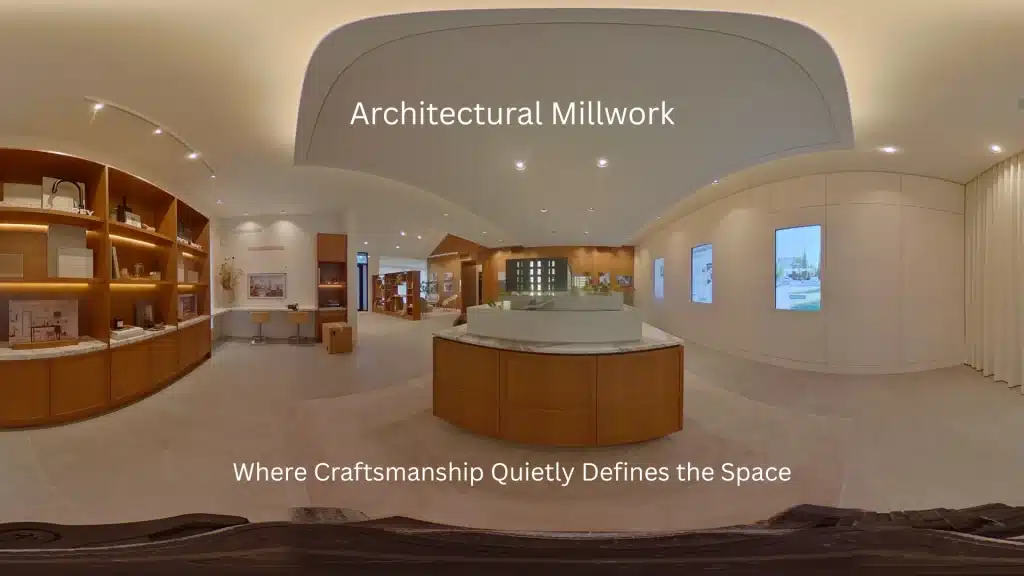
People often sense that a space feels high-end without knowing why, and the real reason is Architectural Millwork. It is not about furniture or paint, but about how everything fits together, from proportions to transitions and alignment. In places like Port Coquitlam and Langley, it is increasingly seen not as a luxury but as the foundation of quality design, shaping spaces that feel intentionally designed rather than simply put together.
Architectural Millwork Explained Without the Industry Fluff
Custom millwork refers to wood elements explicitly designed for a space, rather than selected from a catalogue. Think built-in cabinetry, wall panels, ceiling details, stair components, custom mouldings, and integrated storage solutions.
Unlike stock products, these elements are carefully measured, designed, fabricated, and installed to align with the building’s architecture. Nothing is accidental. Nothing feels generic.
The easiest way to understand the difference is this:
- Cabinetry holds things
- Furniture fills space
- Well-designed millwork becomes part of the building itself
That distinction matters more than most people realize.
Why Architectural Millwork Exists in the First Place
Mass production exists to save time and money. Architectural Millwork exists because buildings are not identical, and neither are the people who live or work in them.
Older homes in Port Coquitlam often have uneven walls or unique dimensions. New builds in Langley might feature open concepts that require seamless transitions between zones. In both cases, off-the-shelf solutions usually fall short.
Architectural Millwork exists to solve real-world problems:
- Awkward layouts
- Wasted vertical space
- Inconsistent finishes
- Poor flow between rooms
It is craftsmanship with a purpose, not decoration for decoration’s sake.
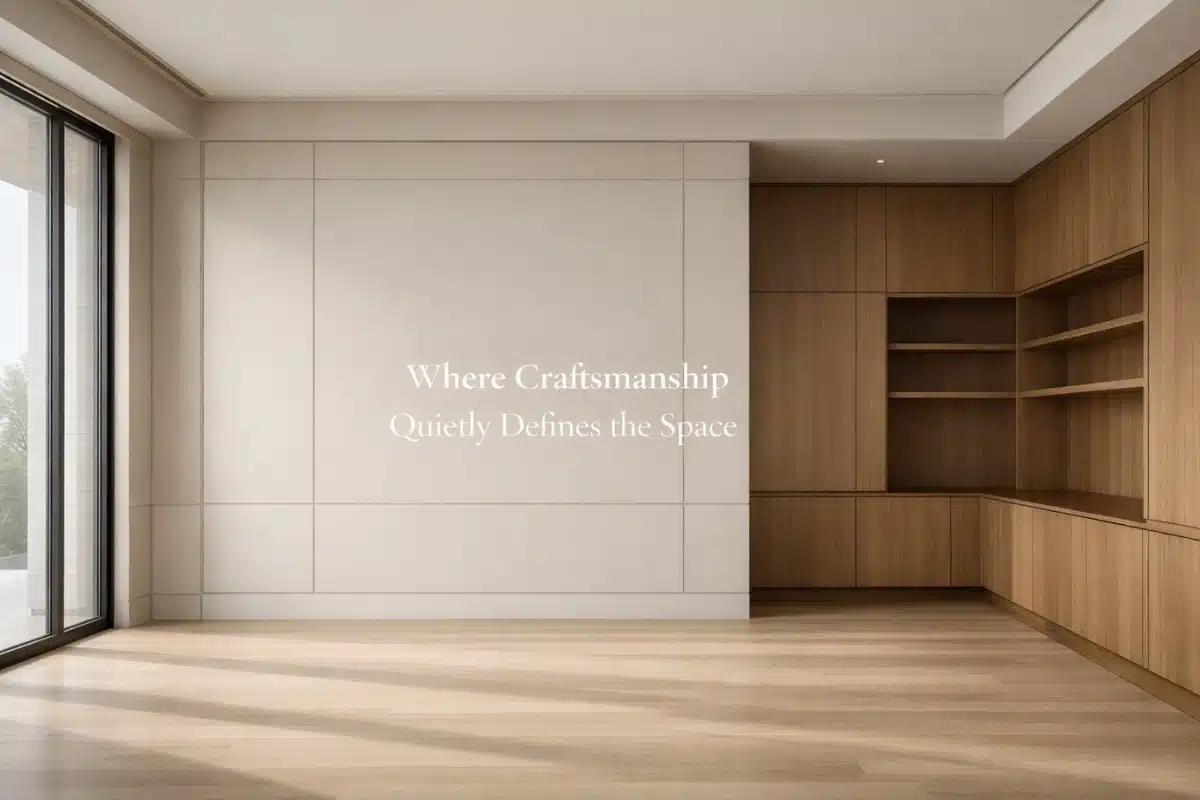
Architectural Millwork vs Custom Millwork: Are They the Same?
This question comes up constantly, and honestly, the confusion is understandable.
Custom Millwork means something was built to custom dimensions. Architectural Millwork goes a step further.
Architectural Millwork:
- It is tied directly to architectural drawings
- Considers structure, load, clearances, and building codes
- Integrates with lighting, HVAC, and finishes
- Requires coordination between designers, builders, and millworkers
So while all architectural Millwork is custom, not all custom Millwork qualifies as architectural.
That distinction is exactly where True Millwork begins to separate itself from basic carpentry.
The Role of Architectural Millwork in Modern Design
Modern spaces are deceptively complex to execute. Clean lines leave no room to hide mistakes.
Architectural Millwork plays a central role in modern design by:
- Eliminating visual clutter
- Creating intentional focal points
- Allowing storage to disappear into the architecture
- Enhancing material continuity throughout a space
A modern kitchen, for example, often relies more on Millwork than appliances to feel cohesive. The same applies to offices, retail interiors, and luxury residences.
Why Homeowners in Port Coquitlam Are Choosing Architectural Millwork
In Port Coquitlam, many homes fall into one of two categories. Either they are older properties with character but inefficient layouts, or newer builds that feel open but unfinished.
Architectural millwork bridges that gap.
Homeowners searching for home renovation in Port Coquitlam often discover that replacing cabinets alone does not solve deeper design issues. Millwork allows spaces to be reimagined rather than patched.
Built-ins around fireplaces, custom storage walls, integrated mudrooms, and stair features are typical examples where Millwork adds both function and resale value.
Why Langley Renovations Depend on Thoughtful Millwork
Langley homes frequently feature larger footprints and open-concept layouts. Without careful detailing, those spaces can feel empty or disjointed.
That is where Architectural Millwork steps in.
Homeowners looking for home renovation in Langley increasingly use Millwork to:
- Define spaces without walls
- Add warmth to large rooms
- Create symmetry and balance
- Support long-term durability
Millwork turns square footage into livable architecture.
Architectural Millwork in Home Renovations
If you have ever searched [home renovation near me], you have probably noticed that many renovations look fine in photos but feel underwhelming in person.
That usually comes down to millwork decisions.
In a renovation context, architectural Millwork:
- Solves layout limitations
- Preserves character while modernizing function
- Adds long-term value beyond finishes
- Reduces the need for future modifications
Renovation projects that skip Millwork often feel temporary.
Working With a Millwork Shop: What Actually Happens
A professional [millwork shop] does much more than cut wood.
The process typically includes:
- Site measurement and evaluation
- Design coordination with architects or contractors
- Material selection and detailing
- Precision fabrication
- Careful installation
When people search [Millwork near me], they are often surprised to learn how involved the process is. Architectural Millwork is not fast. It is deliberate.
That deliberateness is what makes it last.
Materials Used in Architectural Millwork
Architectural Millwork relies on more than just solid wood. Depending on the application, materials may include:
- Hardwood veneers
- Engineered panels
- Solid wood components
- Specialty finishes and laminates
The goal is not just beauty, but stability. Good Millwork accounts for expansion, moisture, and wear over time.
This is where True Millwork earns its name.
Craftsmanship vs Manufacturing: Why It Matters
Let’s be honest. Not all millwork is created equal.
True, high-quality millwork demands tight tolerances, skilled hands, consistent quality control, and authentic experience with on-site construction conditions.
Mass-produced products are fixed the moment they leave the factory. Well-executed custom work, on the other hand, can adapt as a project evolves.
That difference usually shows itself within the first few years of everyday use.
Architectural Millwork in Commercial Spaces
Retail stores, offices, clinics, and hospitality spaces rely heavily on architectural Millwork to shape brand identity.
Custom reception desks, wall features, shelving systems, and integrated lighting all fall under the category of architectural Millwork. These elements influence how people move, feel, and interact within a space.
Commercial clients often work with remodeling companies and renovation companies that understand Millwork as a strategic investment, not a decorative cost.
Coordination With Renovation Contractors
Architectural Millwork does not exist in isolation.
It requires coordination with:
- Renovation contractor in Port Coquitlam
- Renovation contractor in Langley
- Designers
- Engineers
- Installers
That collaboration ensures the Millwork fits perfectly, both visually and structurally.
This is why experienced renovation contractors value early involvement with Millwork.
Moldings, Panels, and Architectural Detail
Elements like Molding & Millwork may seem subtle, but they define transitions. Between the wall and the ceiling. Between rooms. Between eras of design.
Architectural Millwork makes moldings feel intentional rather than ornamental. Panels become architectural features rather than surface treatments.
Custom Millwork That Serves the Architecture
custom millwork works best when it respects the architecture rather than overpowering it.
Good Millwork does not shout. It supports. It frames. It enhances.
That philosophy is central to long-lasting design.
The Concept of True Millwork
True Millwork is not about trends. It is about alignment. When Millwork aligns with structure, design intent, and daily use, it disappears into the architecture.
That is when you know it has been done right.
Choosing the Right Team for Architectural Millwork
When evaluating [renovation companies near me], it is worth asking:
- Do they understand architectural detailing?
- Do they coordinate Millwork early?
- Do they work with a dedicated millwork shop?
The answers to these questions often determine the success of the project.
Why Architectural Millwork Adds Long-Term Value
Unlike finishes that date quickly, architectural millwork ages gracefully.
It improves:
- Daily usability
- Visual cohesion
- Property value
- Longevity of the space
That is why thoughtful homeowners and developers continue to invest in it.
Architectural Millwork and Hometown Renovations
Many people prefer hometown renovation teams because they understand local building styles, bylaws, and climate conditions.
Millwork designed for a Vancouver-area home is not the same as Millwork designed elsewhere; Climate, humidity, and lifestyle matter.
Local expertise makes a difference.
Architectural Millwork Is a Quiet Investment
Architectural Millwork does not demand attention, but it earns respect over time.
The drawers that still glide perfectly years later. The panels that never warp. The spaces that still feel intentional.
That is the real return.
Conclusion: Why It Truly Matters
This craft is not about luxury. It is about intentional design, long-term durability, and seamless integration. When done well, it turns buildings into spaces that feel thoughtful, cohesive, and complete.
In Port Coquitlam and Langley, where homes and commercial properties continue to evolve, it remains one of the most effective ways to create environments that stand the test of time.
Done right, it does more than enhance a space. It quietly transforms it and becomes part of its identity.
Ready to Take the Next Step?
If you are planning a renovation or a new build and want your space to feel purposeful, refined, and built to last, this approach should be part of the conversation from day one.
Discover how Armak Architectural Millwork brings ideas to life through design-driven craftsmanship, precise fabrication, and thoughtful installation.


